Employee Trust in AI: How the Right Training Earns It
Employee trust in AI is stuck: 52% of workers are worried, not hopeful. See how hands-on training and real evidence turn skeptics into confident users.

Only 36 percent of U.S. workers feel hopeful about AI in the workplace, while 52 percent are worried, according to Pew Research Center. Yet the largest global study on the subject also documents the fix: 83 percent of people say they would be more willing to trust AI systems when concrete assurances are in place. That is the whole game for employee trust in AI: it is not a personality trait your workforce lacks, it is an outcome you can build. This post covers where the trust gap really comes from, what a growing parent revolt against classroom screens should teach every employer, and the specific training moves that turn skeptics into confident users.
Why don't employees trust AI at work?
Employees don't trust AI because they see the risks clearly and the payoff vaguely. In Pew's survey of 5,273 U.S. workers, 52 percent said they were worried about AI's future role in their jobs, 33 percent felt overwhelmed, and just 36 percent felt hopeful. Only 16 percent were actually doing any of their work with AI at that point.
Here is the strange part: usage is exploding while sentiment stays underwater. By early 2026, 49 percent of U.S. adults were using AI chatbots, up from 33 percent in 2024, and 38 percent of employed adults used them for work tasks. In the same survey, 63 percent said AI is advancing too quickly, 71 percent expected it to make personal information less secure, and adults expecting a negative impact on society outnumbered optimists 40 percent to 16 percent.
So people are using tools they do not trust. That gap is unstable, and it breaks in one of two directions:
- Quiet abandonment. The pilot ends, usage drops to zero, and the license renewal becomes a budget line nobody defends.
- Careless adoption. People lean on outputs they never learned to verify, and the first visible AI mistake confirms every skeptic's fear.
Both failure modes have the same root cause: nobody was taught what the tool is good at, where it fails, and how to check it.
What the classroom screen backlash teaches employers
It teaches that people reject learning technology when nobody shows them evidence that it works. In Baltimore County this summer, parents testified before the school board asking the district to pull laptops from the earliest grades and cut screen time across classrooms. One father described watching his sixth grader's grades slide while browser history filled up with gaming, videos, and answer-hunting during class. The parent group behind the push now has chapters in more than 30 states.
Notice what the parents were actually objecting to. Not technology itself, but technology deployed by default, optimized for engagement metrics instead of learning. One parent described her third grader rushing through math problems to get back to the reward game bolted onto the lesson.
The research they cite makes the same distinction. A 2024 Stanford-led review found some classroom technology genuinely helps, especially structured practice in early reading, while attention-grabbing extras like pop-up questions and clickable definitions did nothing for comprehension.
The workplace translation writes itself:
- Your employees are stakeholders, not end users. Parents demanded consent and input. Employees who get AI tools dropped on them without either will respond the same way, just more quietly.
- Usage metrics are not outcomes. Time-on-tool proved nothing in classrooms, and login counts prove nothing in your LMS.
- Engagement bait erodes trust. Points, streaks, and confetti tell learners the tool is competing for their attention, not respecting their time. Genuine interaction, being asked to think, practice, and get feedback, is what earns it.
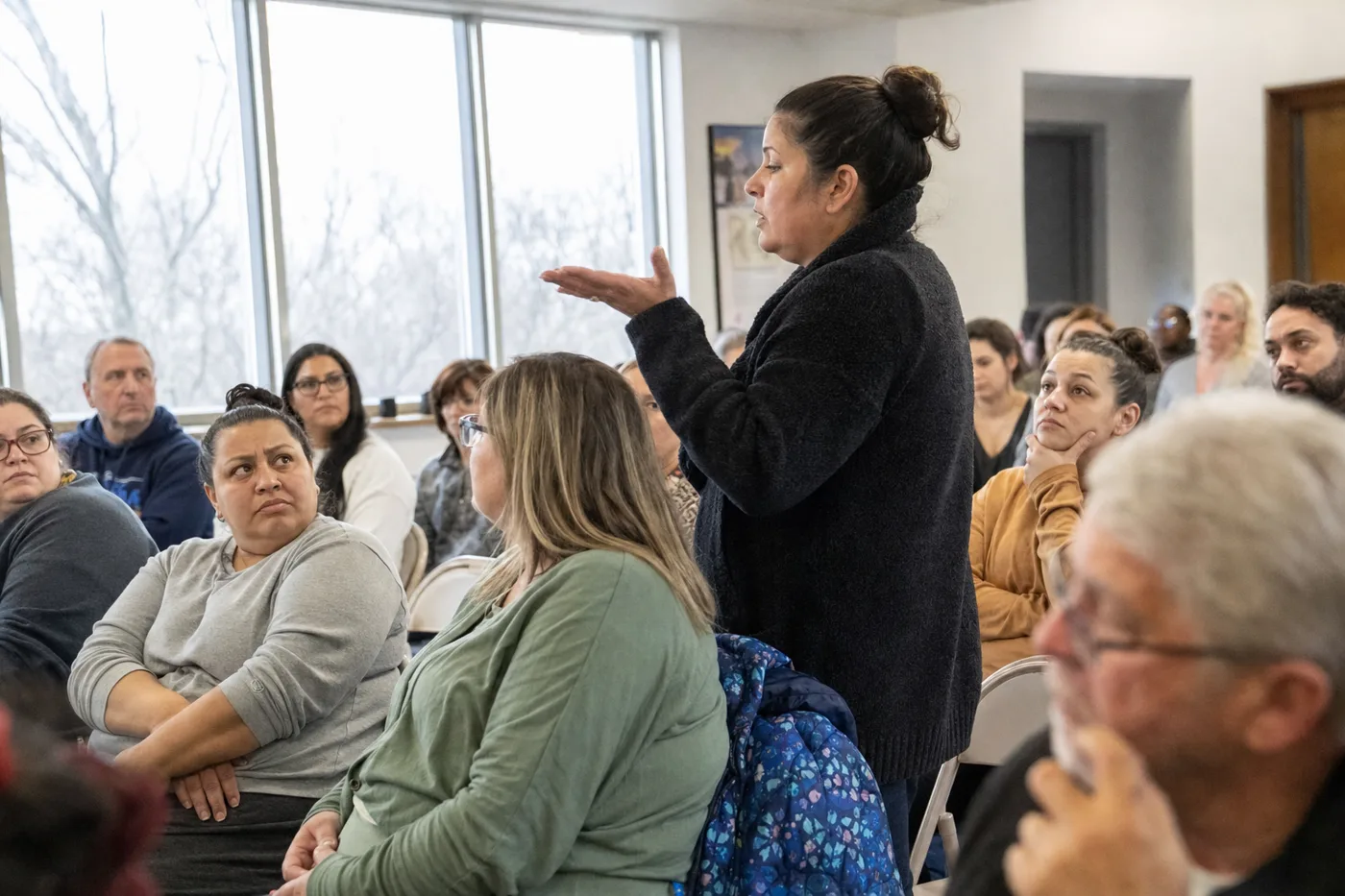
How the right training builds employee trust in AI
Training is the assurance mechanism most companies skip: worldwide, only 39 percent of people have received any form of AI training, according to the KPMG and University of Melbourne global study of 48,340 people across 47 countries. The same study found the assurance effect that should reorder every rollout plan: 83 percent of respondents said they would be more willing to trust AI when safeguards like accuracy monitoring and adherence to standards are in place.
Lead author Professor Nicole Gillespie's conclusion points directly at learning teams: realizing AI's benefits depends on building literacy through accessible training, workplace support, and public education. In other words, the trust gap is a training gap wearing a different name.
What separates trust-building training from a compliance module:
- It is hands-on with real work. People practice on their own tasks, not hypothetical ones, and leave with something finished.
- It teaches failure modes on purpose. Showing learners exactly where the tool gets things wrong is the fastest credibility move available. Nearly half of people globally report low AI knowledge, and unverified output is how small errors become public incidents.
- It builds a verification habit. The lesson is never "trust the output." It is "here is how to check the output in under a minute."
- It closes the loop with evidence. Measure performance before and after, then show the results to the people who took the training. Proof is the assurance employees are waiting for.

What trustworthy AI learning tools look like
A trustworthy tool earns attention through interaction, adaptivity, and visible results, not through autoplay. Whether you are evaluating an AI assistant for the sales team or a platform for onboarding, the same four markers apply:
- It demands participation. Passive watching produces the illusion of learning; questions, practice, and real-time feedback produce the durable kind. This is the entire case for interactive training videos over static ones: a learner who has to respond every few minutes cannot coast, and a tutor that responds back makes the technology's value obvious in the first session.
- It adapts to the person. A tool that adjusts to what each learner already knows demonstrates, in real time, that it is working for them rather than processing them.
- It shows its results. Completion rates convince nobody. Tools that surface what learners can now do, where they struggled, and how performance changed give champions the evidence trust is built from.
- It keeps humans in the loop. Employees trust AI that clearly augments their judgment and managers who can see and override what it does. The Baltimore parents were not asking to ban technology; they were asking for adults to stay in charge of it.
FAQ
How do I get skeptical employees to actually try AI tools?
Start with a task they already dislike, then run a hands-on session where they finish that task with the tool before opinions harden. Small, personal proof beats any all-hands announcement. Skeptics who succeed once in their own workflow tend to become the most credible internal advocates you have.
Does AI training really change how much people trust AI?
Yes, because training functions as the assurance people say they need. The global KPMG study found 83 percent would trust AI more with safeguards in place, yet only 39 percent of people have ever received AI training. Literacy lets people calibrate trust, extending it where the tool is strong and withholding it where the tool is weak, which is healthier for the business than blind faith in either direction.
What should we measure to prove an AI learning tool works?
Measure outcomes, not activity: time-to-competency for new hires, error rates before and after training, assessment performance against a baseline cohort. Then publish the numbers internally, including the disappointing ones. Evidence shared openly builds more trust than a perfect-looking dashboard nobody believes.
The parents packing school board meetings and the employees quietly ignoring your new AI tools are making the same argument: show us it works, teach us to use it, and keep us in the loop. Trust in AI is not a marketing problem, it is a learning outcome, and it is built the same way all durable learning is built: through interaction, practice, feedback, and visible proof. The organizations that treat their AI rollout as a training challenge first will be the ones whose tools are still in use two years from now.
Turn your training into an interactive experience
Nesoi transforms static content into interactive video experiences with AI tutors your team actually finishes.
Book a demo