Retrieval Practice: The Best Way to Make Training Stick
Retrieval practice is why some training sticks and the rest vanishes. See the research on active recall and how to build it into every lesson.

Your team forgets up to 90 percent of what you train them on within a week, and no amount of extra slides will fix it. The fix is a decades-old finding from cognitive science called retrieval practice, which in a 2025 classroom study pushed test accuracy from 41 percent to 68 percent by changing one thing: making people recall the material instead of re-reading it. This guide covers what retrieval practice is, why re-watching and re-reading quietly fail you, the numbers behind active recall, and how to build it into workplace training so knowledge actually sticks.
What is retrieval practice?
Retrieval practice is the act of pulling information out of your memory instead of pushing more in. Rather than re-reading a document or re-watching a video, you close the material and try to recall it, which forces your brain to reconstruct the knowledge and strengthens the memory a little more each time.
It goes by a few names. Cognitive scientists call it the testing effect or test-enhanced learning. Study-skills coaches call it active recall. They all describe the same mechanism: the effort of remembering is what builds the memory.
The idea sounds backwards, because a test feels like a way to measure learning after the fact. The research says otherwise. In their foundational work, Roediger and Karpicke showed that tests can function as learning events, not just assessments, and that recalling material strengthens memory traces far more than passively reviewing it. It is one of the most replicated findings in all of learning science, and it has held up in labs, classrooms, and workplaces alike.
Why does re-watching training feel productive but fail?
Re-watching feels productive because familiarity fools you into thinking you have learned, but familiarity is not the same as recall. When you play a video a second time, the words come easily and the whole thing feels smooth, and your brain quietly reads that smoothness as mastery. Psychologists call this the illusion of competence.
The popularity of passive study is part of the problem. When Dunlosky and colleagues ranked common study strategies in a widely cited 2013 review, re-reading and highlighting landed near the bottom for effectiveness, even though they are the two most common things learners do. They feel productive and cost almost nothing in effort, which is exactly why they do not work.
Meanwhile the clock is running. People forget roughly 50 percent of new information within an hour, 70 percent within a day, and up to 90 percent within a week, a decay curve first documented by Hermann Ebbinghaus in the 1880s and confirmed many times since. Watch a training video once, review it passively, and most of it is gone before the following Monday.

How much better is retrieval practice than re-reading?
Retrieval practice beats re-reading by a wide margin on delayed tests, often by 20 to 50 percent depending on the study. The gap is not subtle, and it shows up in real classrooms, not just controlled labs.
- A 2025 study of Italian schoolchildren had students either take low-stakes recall quizzes or re-read history texts. The recall group scored 67.7 percent on a later test. The re-reading group scored 41.3 percent. Same material, same time, a 26 percentage point swing.
- In a classic experiment, Karpicke and Blunt found that active retrieval improved retention by about 50 percent over restudying, and it even beat elaborate concept mapping when learners were tested a week later.
- The way you take notes matters for the same reason. A 2025 study of 134 trainee teachers found that structured methods like the Cornell format, which push you to reorganize and question the material, produced better retention than plain sentence transcription (a mean of 15.0 versus 12.4 four weeks later). The researchers describe the difference as generative processing versus verbatim transcription. Copying words down is passive. Reworking them is retrieval.
One detail from that note-taking study is worth sitting with. Motivation predicted retention, but perceived cognitive load did not. In other words, the method that felt easiest was not the one that worked best. Effort is not the enemy of learning. It is the price of it.
The forward effect: how testing helps you learn the next thing
Retrieval does not just lock in what you already studied, it makes you better at learning what comes next. Researchers call this the forward effect of testing, and it is one of the most useful findings for anyone who designs training in chunks.
In the foundational studies, people who were quizzed on the first few sections of material later recalled roughly twice as much of the final, never-before-tested section compared to people who simply restudied. A quick recall check does not just cement the last lesson, it primes the brain for the next one.
The most relevant version for training teams involves video. When learners were quizzed after each segment of a recorded lecture, they performed better on later segments, and they also reported less mind-wandering and lower anxiety. A short question between chapters is not an interruption. It is what keeps attention alive and readies the learner for what follows.
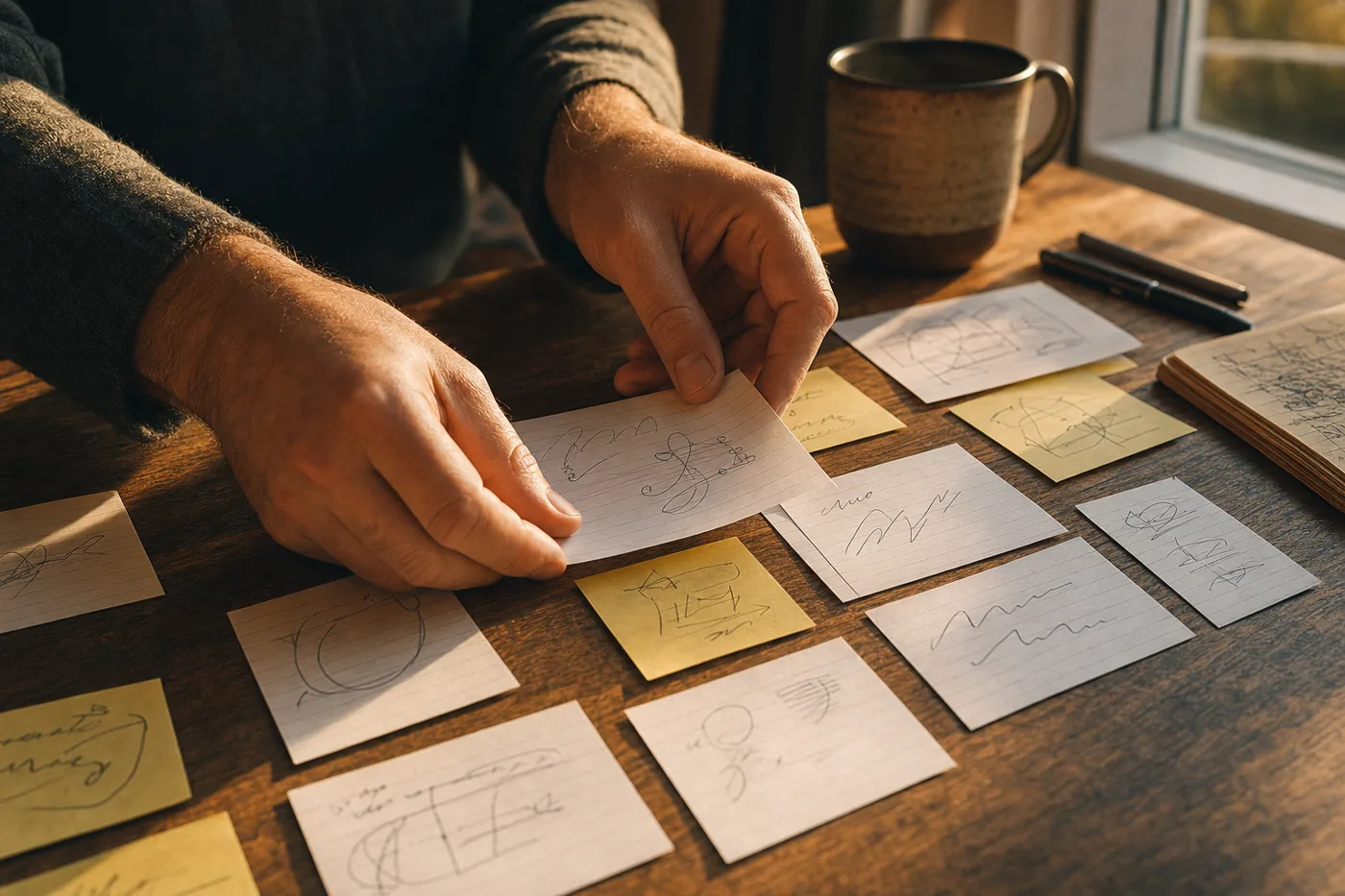
How to build retrieval practice into workplace training
You build retrieval practice into training by replacing passive review with frequent, low-stakes recall: questions, not replays. Here is how to do it without redesigning your whole program.
- Ask before you tell. Open a module with a question learners attempt before they see the answer. Even a wrong guess primes the brain to encode the correct one, an effect known as the generation effect.
- Break video into segments with a recall question after each. This captures the forward effect and cuts the mind-wandering that kills long, uninterrupted videos.
- Keep it low-stakes and frequent. Short, ungraded recall checks scattered through a course beat one high-pressure final exam. The goal is practice, not judgment.
- Give immediate feedback. The Italian classroom study used corrective feedback right after each recall attempt, so a wrong answer became a second learning moment instead of a dead end.
- Space it out. Revisit key ideas after a day, then a week, to push back against the forgetting curve. Spaced retrieval outperforms cramming every time.
- Let people explain it back. Free recall and teaching a concept in your own words are harder, and more effective, than recognizing the right answer in a multiple-choice list.
The hard part is that most training tools are built for delivery, not recall. A slide deck or a video player is happy to play at people forever. Turning every lesson into a two-way exchange by hand does not scale, which is exactly where interactive training videos come in: an AI tutor can pause to ask, listen to the answer, and adapt, so retrieval practice happens automatically instead of as an afterthought.
What this means for video-based training
A video that only plays at people is the single easiest place for retrieval to fail. It asks for nothing, so the brain gives nothing back, and the forgetting curve does the rest. That is the real reason passive video training disappoints, not the production quality.
The fix is not a better script or a shinier animation. It is interaction. A lesson that stops to ask a question, waits for a real answer, and responds to it turns a passive viewer into an active participant, and the science says that is where memory is actually made.
FAQ
Is retrieval practice the same as active recall?
Essentially yes. Active recall is the everyday name for the study technique, and retrieval practice is the term researchers use for the underlying mechanism. Both mean the same thing: deliberately recalling information from memory rather than reviewing it in front of you.
How often should employees do retrieval practice?
Little and often works best. A few short recall checks spread across days and weeks will beat one long review session, because spacing forces the brain to rebuild the memory each time. Aim for brief, frequent, and low-stakes rather than rare and heavy.
Does retrieval practice work for video-based training?
Yes, and video is one of the best places to use it. Quizzing learners after each segment of a recorded lesson improved their performance on later segments and reduced mind-wandering. Interactive video that asks questions as it plays builds retrieval practice in automatically, without anyone having to bolt a quiz on afterward.
The science is settled: memory is built by pulling knowledge out, not by pushing more in. Every time your training asks a learner to recall, explain, or apply instead of just watch, you trade a little comfort for a lot of retention. That is the whole case for interactive learning, because a lesson that talks back is a lesson that sticks.
Turn your training into an interactive experience
Nesoi transforms static content into interactive video experiences with AI tutors your team actually finishes.
Book a demo