AI Guided Learning: Why Asking Beats Giving Answers
AI guided learning beats answer-giving chatbots. See how Socratic AI tutors drove 127 percent bigger gains and how to build training that guides.

Here is the finding that should change how you buy AI training this year: a Google DeepMind tutor that asked guiding questions in 76 percent of its messages, and gave a straight answer only 2 percent of the time, helped students gain roughly a year of math in eight weeks. In a separate university study, an AI tutor built to nudge instead of spoonfeed produced a 127 percent improvement, versus 48 percent for a standard chatbot. Same underlying models, wildly different results, and the difference comes down to one design choice: whether the AI does the thinking for the learner, or makes the learner do it.
That choice is the whole ballgame. Most AI training tools default to being helpful assistants, which sounds good until you realize that a helpful assistant hands over the answer and quietly robs your people of the practice that makes knowledge stick. The tools that actually move outcomes do the opposite. They guide.
Why AI that gives answers fails learners
AI that gives answers fails because learning requires effortful retrieval, and a chatbot that solves the problem for you removes the effort entirely. Researchers who studied AI tutors found that chatbots can "backfire because students lean on them too heavily, get spoonfed solutions" and fail to retain the material, according to reporting in the Hechinger Report.
This is the trap hiding inside every "ask the AI anything" rollout. It feels productive. Completion rates look fine. Then nothing sticks, because the learner outsourced the hard part.
The OECD Digital Education Outlook 2026 put a fine point on it: generative AI can support learning when it is guided by clear teaching principles, but if it is designed or used without pedagogical guidance, outsourcing tasks to AI simply boosts short-term performance with no real learning gains. In other words, the output looks better while the human gets no smarter. For a compliance course or a sales onboarding, that is the worst possible outcome, because you are paying for behavior change and getting a nicely formatted illusion of it.
The lesson is not "AI tutors do not work." It is that an AI tutor is only as good as the pedagogy you build into it.
What Google's guided AI tutor got right
Google's tutor worked because it was deliberately rebuilt to guide rather than answer, and the usage data proves learners will engage when the design is right. DeepMind took Gemini and reshaped it into a system called Guided Learning, then ran a classroom trial in Sierra Leone that lasted just over eight weeks. The results, reported by Forbes, were striking:
- Students posted a 0.26 standard deviation improvement in mathematics, which research director Irina Jurenka framed as roughly a year of extra tuition, with the honest caveat to "take it with a grain of salt."
- 69 percent of students met or exceeded their usage targets, against a typical voluntary edtech adoption rate closer to 5 percent.
- The gains generalized to independent assessments, meaning students learned the concept, not just the answer to one question.
The mechanism is the interesting part. In the trials, the AI asked guiding questions in 76 percent of its messages and gave direct answers only 2 percent of the time. Jurenka summed up the philosophy simply: "Language models are really built to be assistants. In learning you really want to do the work yourself."
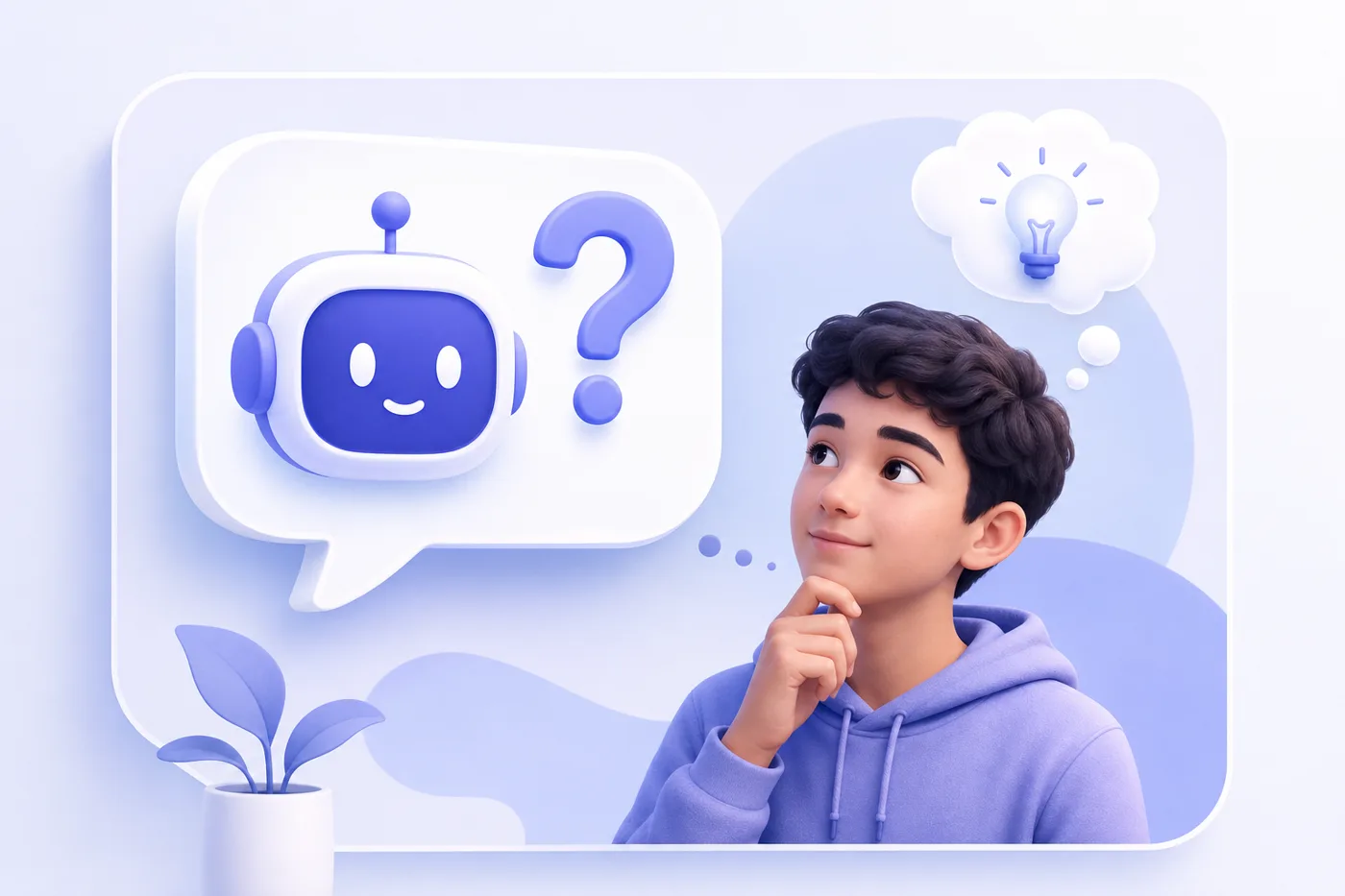
That 76-versus-2 ratio is a design spec you can steal. When your AI training tool is about to hand over a solution, the better move is almost always a question that points the learner one step closer and lets them close the gap themselves.
How adaptive difficulty makes AI guided learning stick
Adaptive difficulty is the second half of good AI guided learning, because guidance only works when the challenge sits just above what the learner can already do. A University of Pennsylvania study of 800 high school students learning Python tested exactly this. When an AI tutor continuously adjusted problem difficulty based on each student's performance, learners scored better on the final exam than peers working through a fixed easy-to-hard sequence, an edge the researchers put at the equivalent of 6 to 9 months of additional schooling.
The system worked by watching how students actually behaved: their answer patterns, their code revisions, their back-and-forth with the chatbot, then choosing the next problem to land in the learner's zone of proximal development, the sweet spot where a task is hard enough to require effort but not so hard it triggers a shutdown.
Researcher Angel Chung explained why learners cannot do this sequencing for themselves: "Students usually don't know what they don't know. The student doesn't have the ability to ask the right questions."
Two details matter for anyone designing corporate training:
- Personalized sequencing increased practice time by about three minutes per problem, roughly an extra hour per module. Better design did not just improve scores, it pulled people to engage longer.
- Beginners benefited most. Students new to programming gained the most from adaptive sequencing, while experienced ones did fine either way. That maps directly to onboarding, where your least-informed people need the most support.
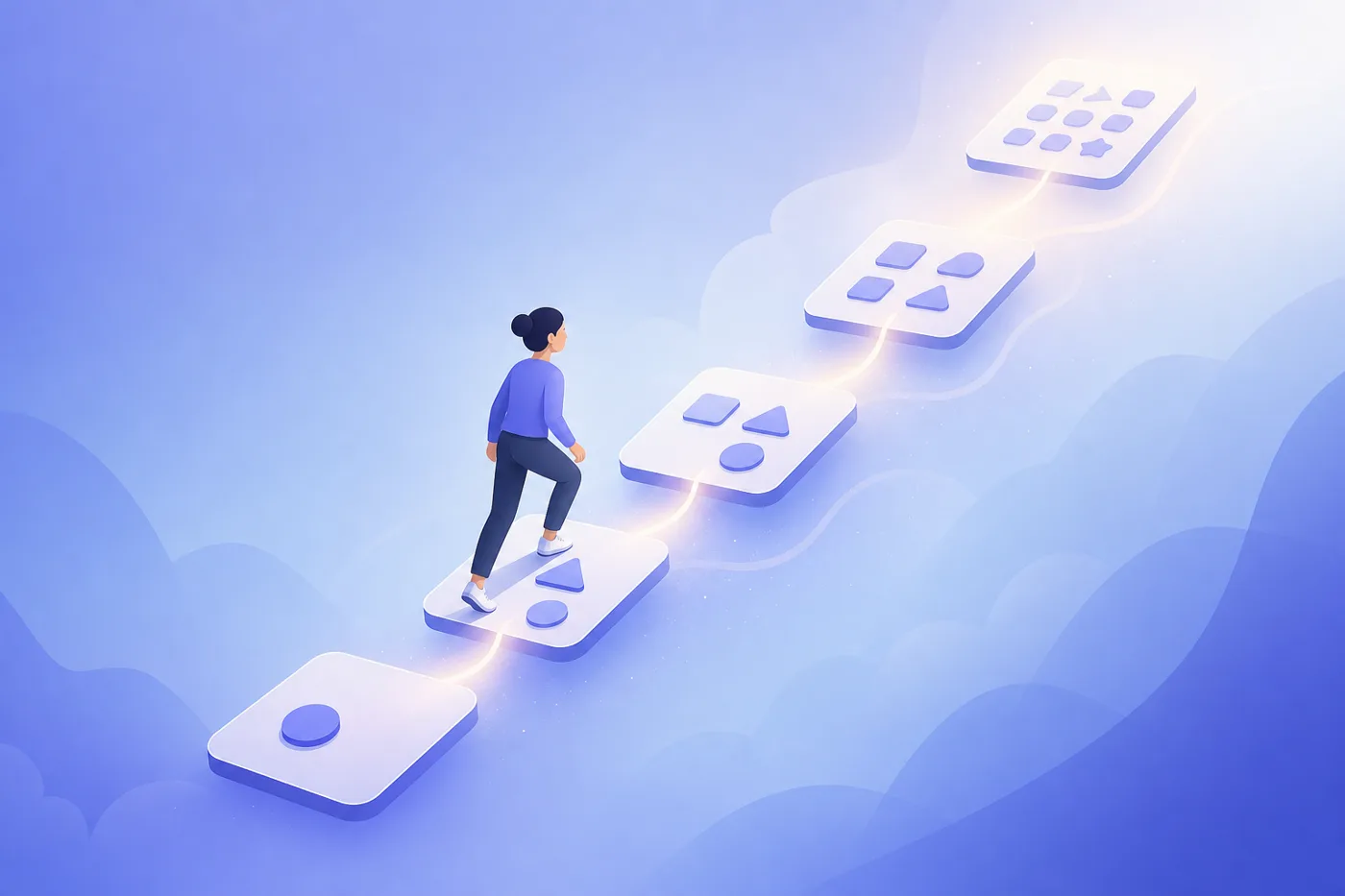
Guiding questions keep the learner doing the work. Adaptive difficulty makes sure the work is the right work. Put them together and you get the results above. Leave them out and you get a chatbot that autocompletes homework.
How to design AI guided learning for your team
The design principles above translate cleanly into rules you can apply to any training program, whether you build it or buy it. Here is the short version:
- Default to questions, not answers. Configure your AI tutor to respond with a nudge, a hint, or a check-for-understanding question before it ever surfaces a solution. If it hands over answers on the first ask, it is an assistant, not a tutor.
- Make it adapt in real time. The content a learner sees should change based on what they just got right or wrong. Static, one-size-fits-all modules cannot do this, no matter how good the video is.
- Build in retrieval. Ask learners to recall, apply, or explain, because the act of retrieving is what moves knowledge into long-term memory. Passive watching does not.
- Measure engagement honestly. Completion is a vanity metric. Track time-on-task, questions attempted, and whether learning transfers to new problems, the way the Google team tracked generalization.
- Do not fear a little friction. The tools that guide feel slightly harder in the moment because the learner is doing the work. That friction is the product working, not a bug to smooth away.
This is exactly the gap interactive training videos are built to close. Instead of a passive lecture a learner half-watches, an interactive video with an AI tutor pauses to ask, adapts to the answer, and responds in real time, turning a monologue into the kind of guided, effortful practice the research keeps rewarding. The medium finally matches the pedagogy.
The organizations that win with AI training in the next year will not be the ones with the flashiest chatbot. They will be the ones whose tools make learners think.
FAQ
What is the difference between an AI assistant and an AI tutor?
An AI assistant is optimized to complete your task, so it hands over answers to save you effort. An AI tutor is optimized for your learning, so it withholds the answer and asks questions that make you do the thinking. Google's Guided Learning made this explicit by asking questions in 76 percent of messages and giving direct answers only 2 percent of the time.
Does AI guided learning actually improve results, or just engagement?
Both, and that is the point. In Google's Sierra Leone trial, guided AI produced roughly a year of math gains in eight weeks and the improvement generalized to new assessments, meaning students learned the concept rather than memorizing a single answer. Adaptive, question-first design lifts real learning, not just time spent in the app.
How do I know if a training tool guides or just spoonfeeds?
Ask it a question a learner would ask and watch what it does. If it immediately gives the full answer, it is a spoonfeeder. If it responds with a clarifying question, a hint, or a smaller sub-problem, and adjusts based on your reply, it is built to guide. That single test predicts whether your people will actually learn anything.
The research is converging on a clear message: passive content and answer-giving chatbots produce the appearance of learning, while guided, adaptive interaction produces the real thing. That is the entire case for interactive learning, where every lesson asks, adapts, and responds instead of simply playing. Build your training to make people think, and the outcomes follow.
Turn your training into an interactive experience
Nesoi transforms static content into interactive video experiences with AI tutors your team actually finishes.
Book a demo